Raising Ants in a Test Tube
Cet article n'est disponible qu'en chinois et en anglais. Voici la version anglaise.
Raising Ants in a Test Tube
After a female ant has mated (we call her a new queen, meaning a fresh, young queen), she starts looking for a reasonably suitable spot to dig in and hide, lays her first offspring, and begins founding her own empire. In the wild, a new queen will first look for a space just big enough for herself, which keeps predators out and disturbance to a minimum. Only once the colony grows too large for that space does she gradually build a bigger nest. For the same reason, in captivity you should never move a lone new queen straight into a large nest. She will feel insecure, which disrupts egg laying and can even kill her. Matching the size of the colony to the size of its nest is essential!
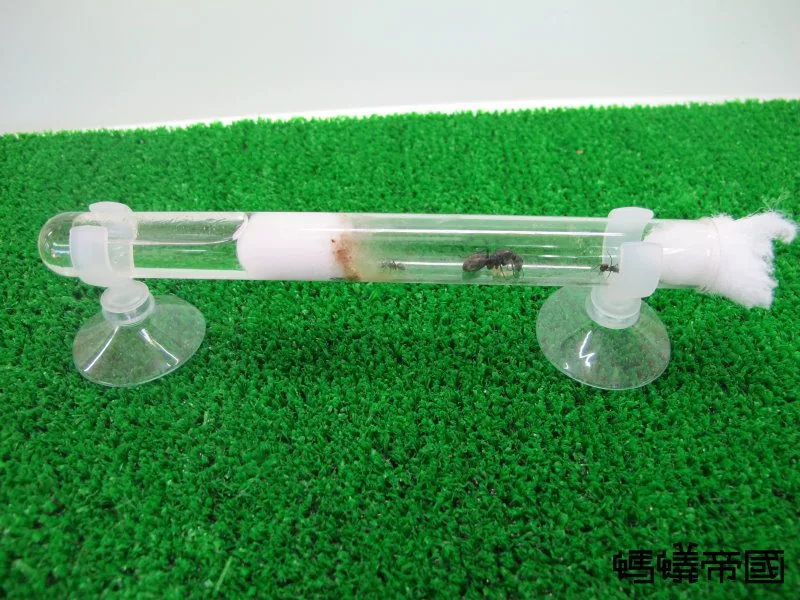
We use test tubes for new queens mainly because the size is just right, and the water plugged into the back keeps the tube humid without any effort on your part. The ants simply settle wherever the humidity suits them. That makes the test tube the ideal first-stage nest in ant keeping.
Note: For how to prepare a test tube for a new queen, see our article: An Illustrated Guide to the Test Tube Nest for New Queens and Founding Colonies.
Feeding inside a test tube is the part that tends to puzzle people. We all know ants divide their territory into the nest itself and an outside foraging area, but a test tube is so small that the feeding area has to be inside the tube as well. The illustrated steps below show how to care for a new queen or a young colony in a test tube.
Step 1
First make sure your test tube cannot roll. Use a tube clamp or a tube rack, or improvise with a clothes peg, a binder clip or a lump of modelling clay to hold it in place.
Also think about where you put it. Keep it somewhere it will not fall or roll, and ideally somewhere dark with little vibration and few changes in light. Your new queen will have a much better chance of success!
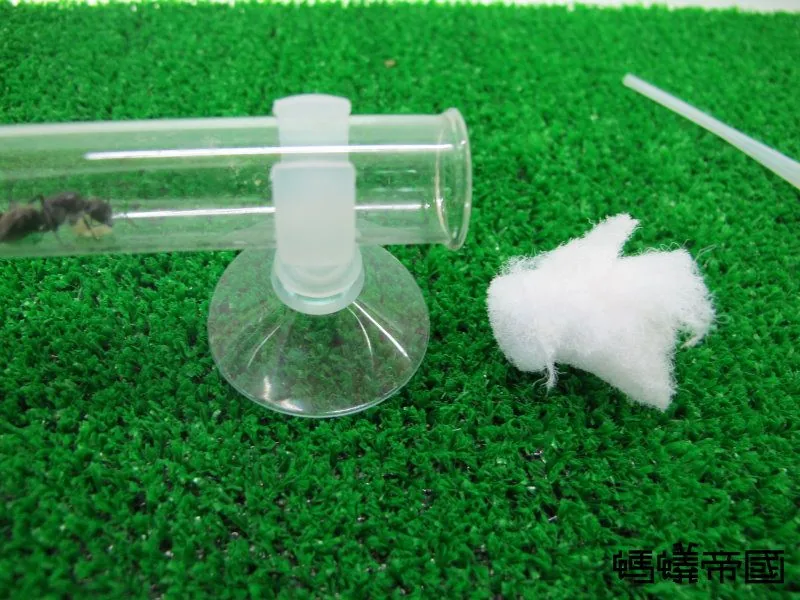
Step 2
Prepare the food (such as liquid feed, honey water, fruit or a small piece of a dead insect), then open the cotton plug.
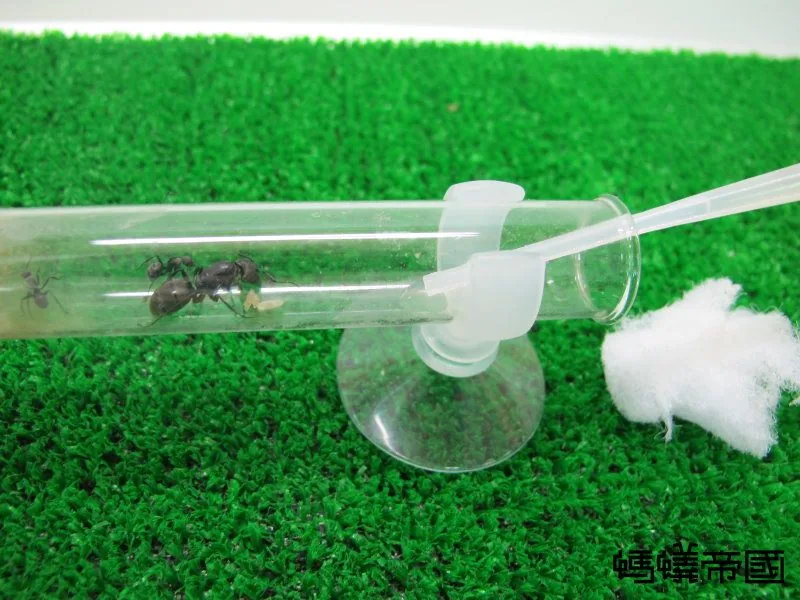
Step 3
Place the food in a sensible spot: not too close to the ants, and not too close to the cotton plug at the opening, so it does not soak into the cotton.
Note: Give only as much food as the ants need. Do not overfeed! For a new queen we recommend mostly liquids, and only a small amount, so it does not get onto the ant herself or foul the tube and reduce your chances of success.
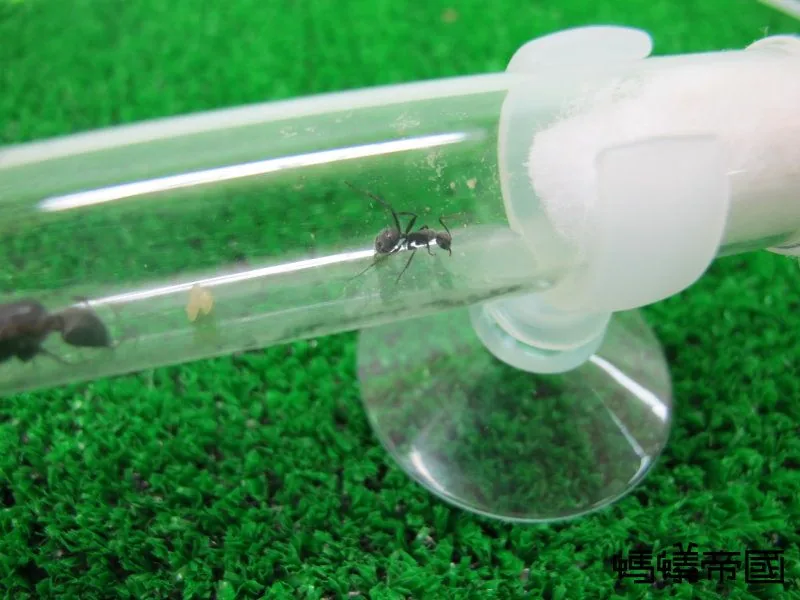
Because the food is placed so close to the ants, they will usually take it readily. If they do not, check whether they are already full, or whether the food is unsuitable or simply not to their taste (not sweet enough). If you are worried about giving too much liquid, you can also offer it on a cotton bud, or soak cotton inside a short piece of drinking straw and slide that into the tube.
That covers feeding during the test tube stage. As the colony grows and the ants start rushing out to defend the nest whenever you open the plug, it is time to move them to a new nest or add a foraging area to make feeding easier. If you have any questions, feel free to contact us!