Why Keep Ants?
Cet article n'est disponible qu'en chinois et en anglais. Voici la version anglaise.
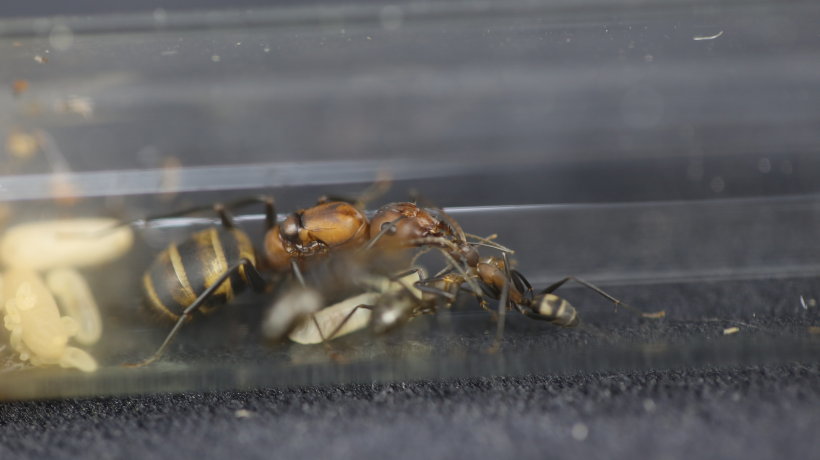
People’s desire to keep animals usually comes from a longing to connect with nature. I think everyone can understand why people keep pets. In recent years, however, “exotic pets,” which the general public does not understand, have not only become more and more “unusual,” but the number of people keeping them has also steadily grown.
Taken literally, an “exotic pet” is a strange pet. But I believe that even the strangest things have a logic behind them, and the appeal of being different is surely one factor. I actually think “exotic pet” is only a transitional label. The reason such a pet is defined as strange is that the general public finds it strange and unusual; but once every household, or plenty of the friends and family around you, keeps one and finds it perfectly normal, the term “exotic pet” no longer fits.
In Taiwan in recent years, the term “exotic pet” immediately brings certain animals to mind: reptiles, and arthropods such as insects, spiders and scorpions. I believe that no matter how many years pass, these will still be regarded as exotic pets, because I doubt there are any pets in the world stranger than these. Even if ordinary people come to understand them, they will not necessarily want to keep them; or rather, they will not necessarily understand the mindset behind keeping them.
I myself have kept many exotic pets, and among all the exotic pets that people find hard to understand, “ants” are surely the most unusual. I imagine you would like to know how I first came into contact with ants and wanted to keep them. For that, I have to start from my childhood.
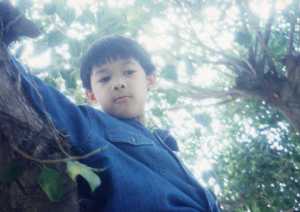
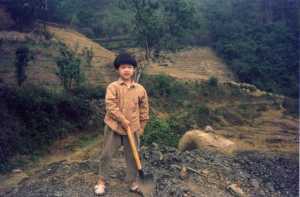
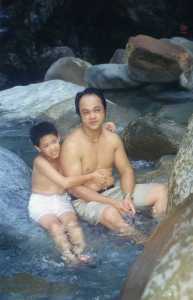
For as long as I can remember, I grew up in the city. The insects we saw most often at home were mosquitoes and cockroaches. My father grew up in the mountains of Sanxia with his older brother, so once I was old enough to walk and run, every weekend he would take me to Sanxia to help my uncle with his farm work. For a city kid, on top of enduring the long drive and the mountain roads, I had to put up with a mountain environment that, at the time, I found not the least bit fun. It was an ordeal. But gradually I started finding my own amusement, fiddling with the plants and insects I came across; that was how I passed the time back then. Later my father began showing me the insects and animals he knew and had spotted, and little by little that sparked my curiosity and my desire to observe. From fiddling with insects, I moved on to quietly observing them and even helping them (turning a beetle back over when it could not right itself, freeing a butterfly stuck in a spider’s web, and so on). From constantly resisting and making a fuss by any means possible to avoid going to the mountains, I came to look forward to the mountains more than anything else each week. I believe that is when I fell in love with nature. Along the way, whenever I saw an insect I was interested in observing, I badly wanted to take it home and keep it, because I always felt that only by keeping it could I observe it without the limits of time and place. Grasshoppers, crickets, katydids, mantises, cicadas, caterpillars, stick insects, scarab beetles, rhinoceros beetles, stag beetles, weevils, diving beetles… insects from the land and from the water, I kept them all. But there was one insect that troubled me, troubled me over how to bring it home and keep it (not only not knowing how to carry or catch them, but also how to get my parents to agree): the ant. Ants were the insect I could see in almost any environment. From first playing with them to coming to admire their wonder and their unity, a single shift in thinking once had me crouched on the ground for hours on end watching ants.
People are like this: the harder something is to get, the more you want it. My desire to keep ants grew stronger with every observation as my curiosity about them increased. When I finally managed to collect a few ants in a sealed jar and successfully smuggled them home behind my mother’s back, what I saw when I opened it at home was one corpse after another, and the few survivors crawled out with the last of their strength. What followed, inevitably, was a scolding and a beating. Eventually, with the rise of the internet, I relied on scraps of information, constant trial and error, and advice from experienced keepers who had gone before me, and formally began my ant-keeping journey. Ants are the one insect my passion for has never wavered from childhood to today, and as my keeping experience, my abilities and my thinking have grown and changed, I have only become more devoted to them. I now have more than ten years of keeping experience and have kept no fewer than 50 species. Today my aim is to keep ants well rather than merely keep them, and I have a much deeper understanding of how every kind of ant changes from the very beginning through each stage. The me of today is not satisfied with simply keeping them alive, but asks how to keep them better, and I am planning to breed ants myself, to avoid the disruption to the balance of living things that collecting causes. Although I never collect indiscriminately, I believe it inevitably has some slight impact on that balance.
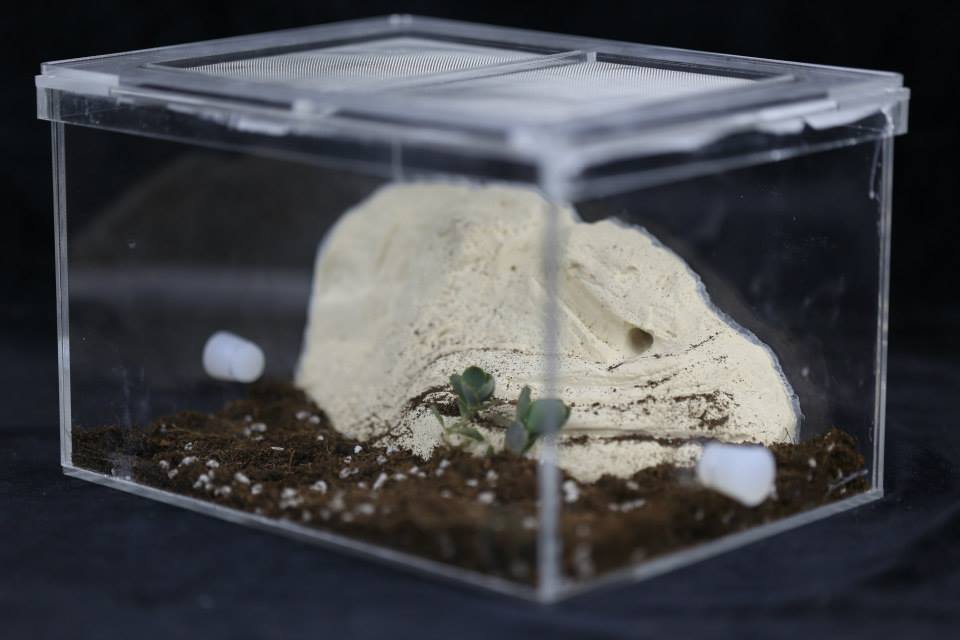
As for why I am so passionate about ants, I need to explain it in terms of their own characteristics and everything I have seen along the way. First, let us get to know ants in simple terms:
- Social insects: a social insect, like human society, lives in a small community that develops together, with different generations and “castes” existing within this little society. In other words, many generations under one roof, with social behaviour between them, raising the next generation together, each living for the same shared goal: to expand their colony and send out their own genes to spread through their descendants. Only three kinds of insect in the world are like this: ants, bees and termites. In terms of safety, potential harm and ease of observation, ants are the most suitable of the three to keep.
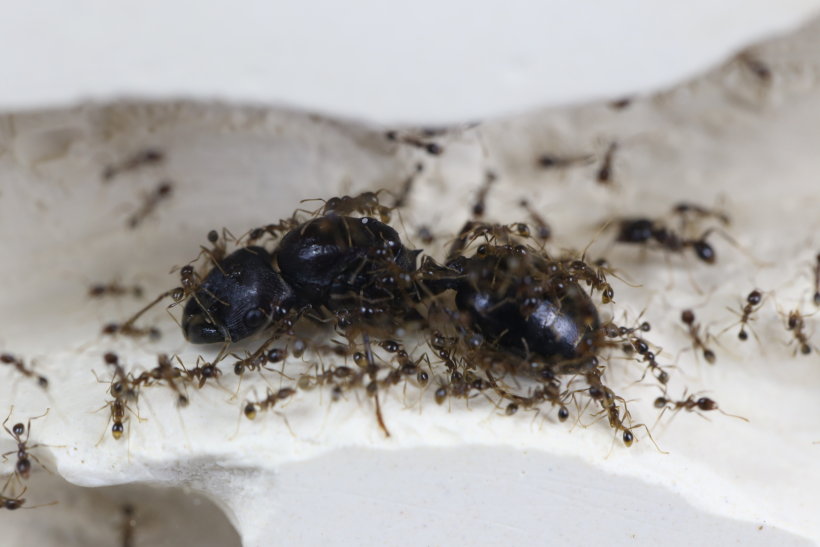
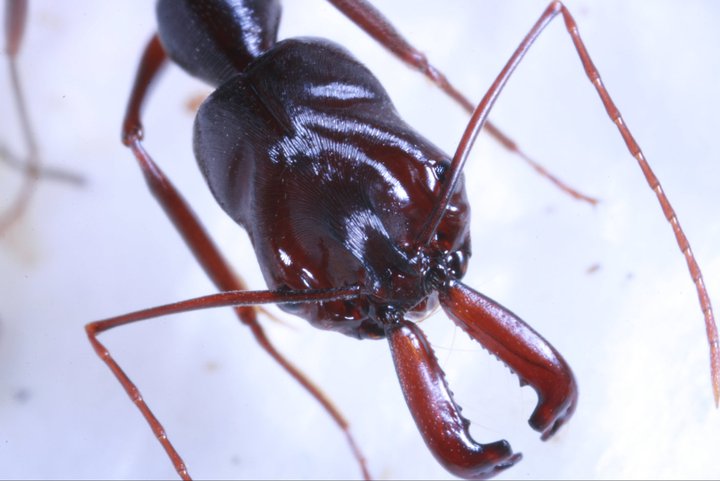
- Enormous diversity: there are an estimated 10,000-plus species of ants in the world, and an estimated 300 to 400 on the island of Taiwan alone, which shows how important they are ecologically. Every species has its own body size, colouring, special behaviours, habitat, nesting style, diet, traits, temperament and more, and what these reflect are different evolutionary mechanisms and outcomes that leave you genuinely in awe of the beauty and wonder of nature.
Based on these two core reasons, let me sum up my own point of view in a single sentence to give you a sense of what keeping ants is about:
“Enjoy the pleasure of observation and build an Empire of Ants of your own.”
In the past, my desire to keep ants came in two forms: the “urge to observe” and the “urge to create.” The “urge to observe” (you could also call it the thirst for knowledge) begins with curiosity or affection. In the wild we can only observe a tiny fraction of ant behaviour, such as foraging or relocating; 90% of their behaviour takes place inside the nest, and we have no way to observe inside a wild nest. The “urge to create” begins once the urge to observe has led you to bring them home to keep: the creation that follows, such as preparing the nest and environment with your own hands. It is like keeping fish: a single tank is enough to keep them, but you can also add plants, hardscape, lighting and so on, all with the aim of making yourself happy and comfortable looking at it, and making the creatures you keep equally happy and comfortable.
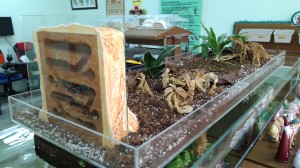
And why do ants spark the urge to observe? Because of their remarkable social behaviour and their unusual patterns of behaviour. Whenever you want to understand what someone or something is doing, whether a person, an animal or an insect, you use observation to confirm whether it matches what you currently understand. To this day I remain deeply impressed by the remarkable behaviour and unity of ants, and I keep making new discoveries and gaining new insights.
Today I have a new way of thinking about ant keeping, which is on the application side. I deeply believe ants possess many abilities, functions and behaviours worth discovering that could be applied to humans, just waiting for people to find them. For example, ants, like bees, are social insects, and they likewise secrete natural antibiotics to protect the nest and brood from bacteria, mould and viruses; the advantage of natural antibiotics is that they do not give rise to resistance. Some ants also spin cocoons, and perhaps ant silk could have greater practical value than silkworm silk. Or in food or medicine, they might offer people alternative ways to obtain amino acids and protein or to treat disease. I have always believed that whatever the research, keeping is the foundation, so I devote myself to keeping, in the hope that there will be many cross-disciplinary collaborations in the future. Through collaboration across different fields of expertise and knowledge, I am confident there will be truly extraordinary innovations.