Complete Metamorphosis: How an Ant Grows Up
Dieser Artikel ist derzeit nur auf Chinesisch und Englisch verfügbar. Nachfolgend die englische Fassung.
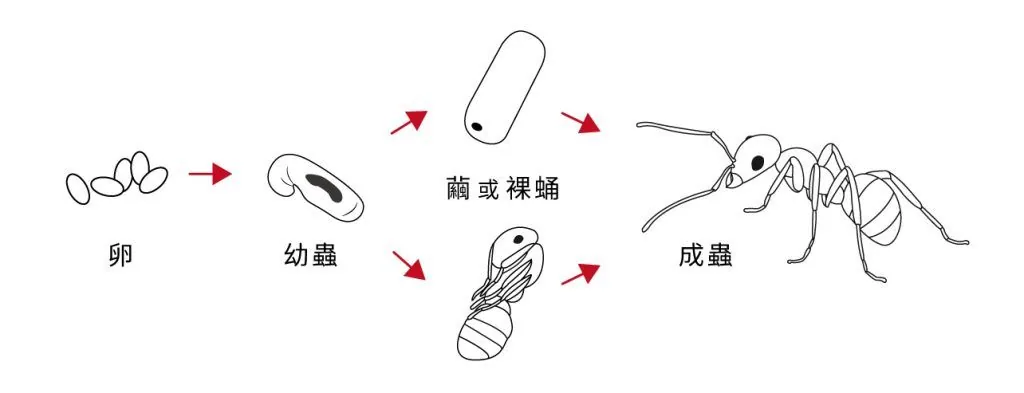
Many people do not realize that ants are insects with complete metamorphosis, and assume an egg simply hatches into an ant. In reality, the queen lays an egg, which hatches into a larva after a set time. The larva grows through five molts, then spins a silk cocoon and pupates (some species pupate without a cocoon), and only then does it finally emerge as an adult ant, as shown below.
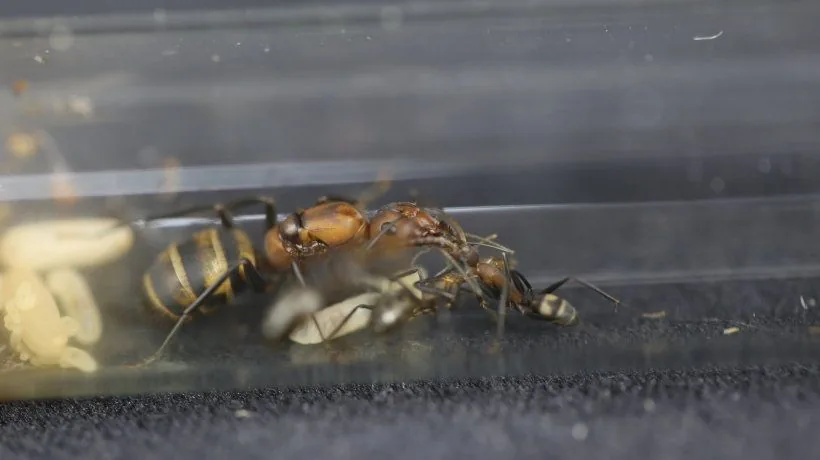
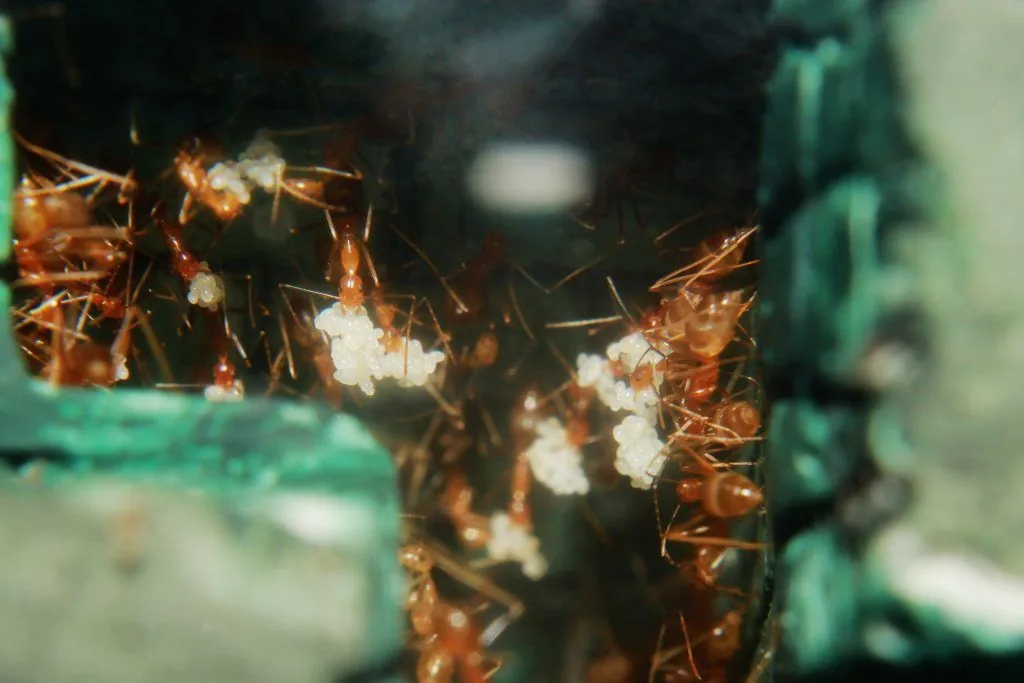
The egg is the smallest and most delicate of all the stages. Eggs are usually off-white, white or cream, though in some species they can turn pink or orange depending on what the colony has eaten. Whatever the color, each egg is a single uniform shade. Round and oval shapes are the most common, though some are long and cylindrical. The eggs are sticky, so they cling to one another, which makes it easier for the workers to tend them all together.
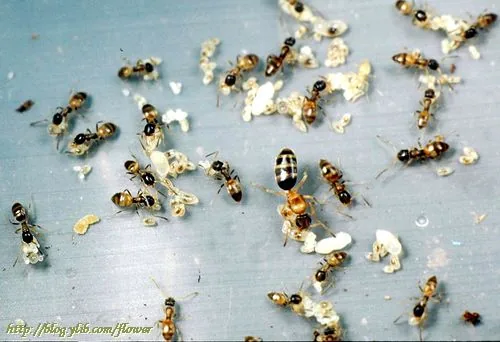
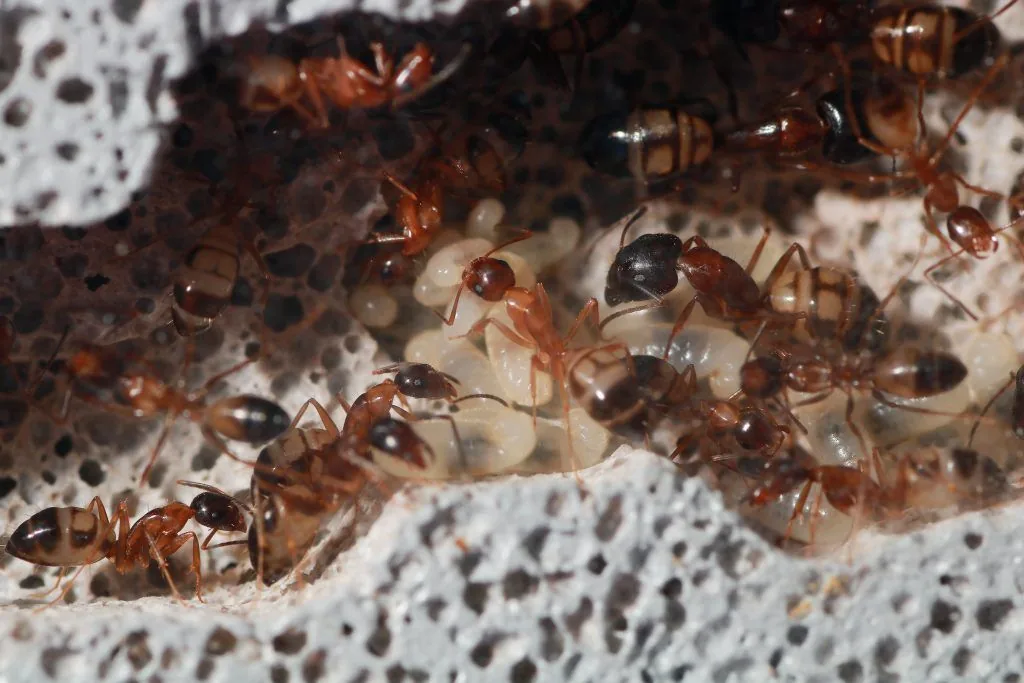
The larval stage is the only stage in which the ant changes size, and the only one in which it eats. In some species the larvae feed themselves on food the workers bring back; in others they are fed directly by the workers through trophallaxis. There are five larval instars, and at each one the larva sheds its skin and grows a size larger. Larvae are usually elongated or shaped like a grain of pearl barley, and some even have soft spines, which are harmless and mainly help them cling to different surfaces. Larvae are typically milky white and slightly translucent, with dark organs visible in the middle, and because the body wall is pale and thin, the food they have eaten usually shows through as well.
The cocoon (pupal) stage is the final step before becoming an ant. Before pupating, the larva eats until it is completely full, then begins spinning silk to wrap itself up (some species pupate without spinning a cocoon). Once fully enclosed, it pupates inside. The cocoon is oval and light or dark brown. Because the larva empties the waste from its body before pupating, one end of the cocoon is black (or the color of the food).
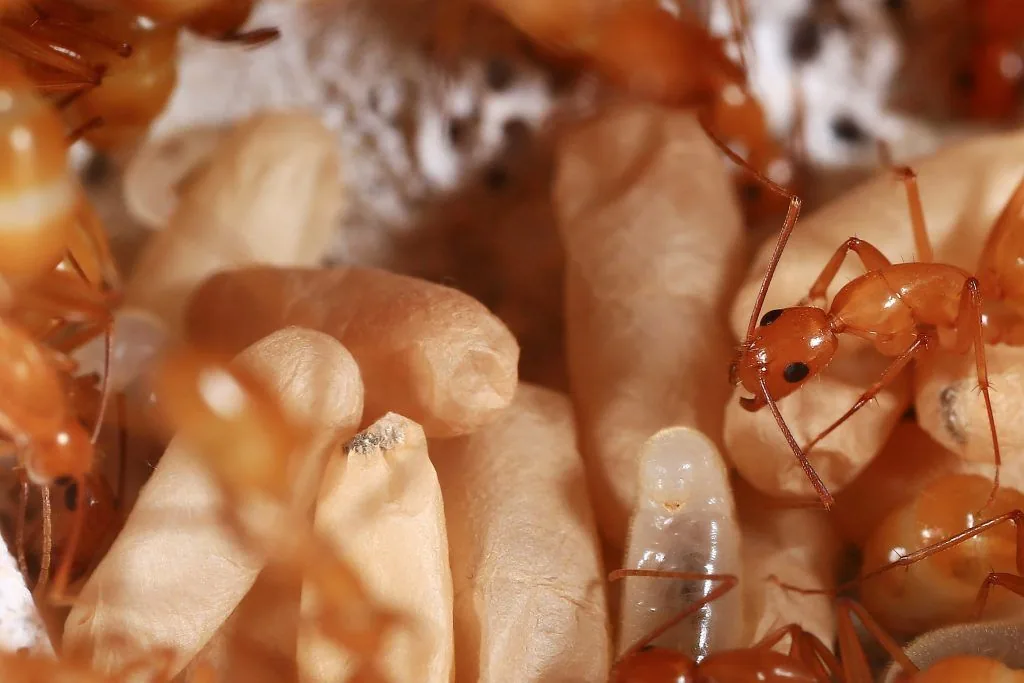
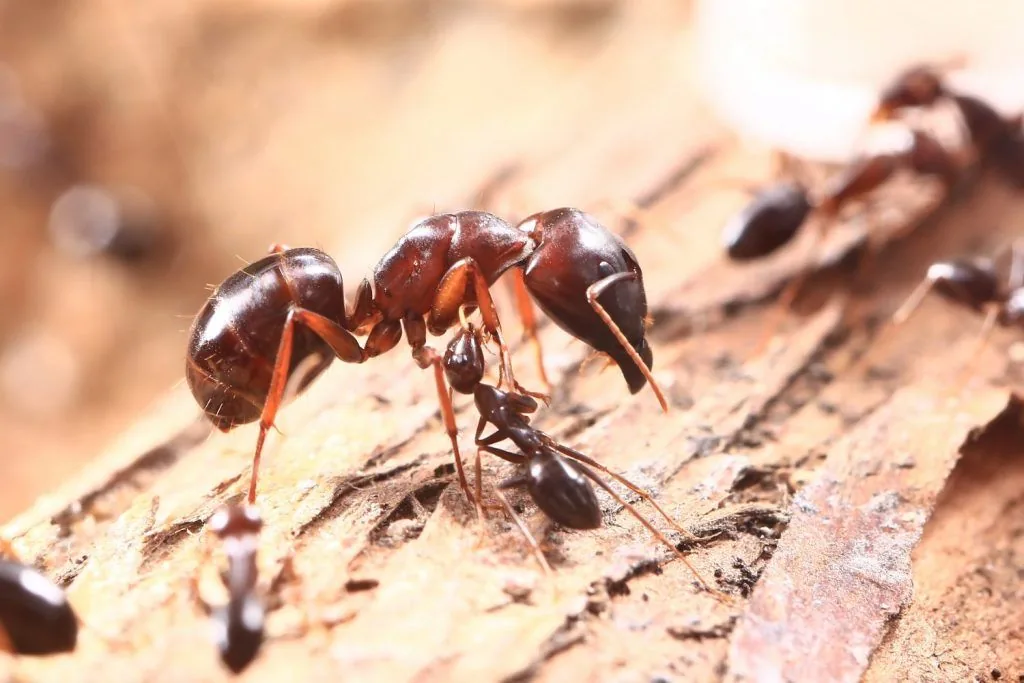
The adult stage is the ant everyone recognizes. After a period of time, the pupa completes its transformation, and the workers help tear open the cocoon and pull out their still-immobile nestmate. Without help from other workers, it actually cannot get out on its own. Once it has emerged as an adult, its body size never changes again.