Wild-Collected vs. Captive-Raised Colonies
Dieser Artikel ist derzeit nur auf Chinesisch und Englisch verfügbar. Nachfolgend die englische Fassung.
Wild-Collected vs. Captive-Raised Colonies
Note: The comparison below looks at wild-collected and captive-raised colonies from the perspective of “ant keeping.” From an ecological perspective, the picture is not entirely the same.
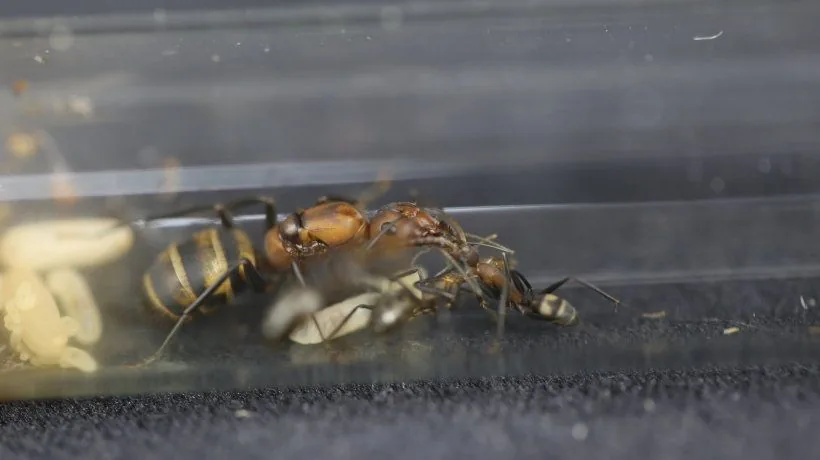
A “wild-collected colony” means a colony dug up and brought back from the wild, while a “captive-raised colony” means one raised from a new queen.
Both can be summed up in a few words, but what they actually mean could hardly be more different!
Because a wild-collected colony has been dug out of the wild, the process of finding the nest involves turning things over, digging and chopping, all of which disturbs, injures or even kills other living things.
And if you do manage to find where the nest is, the next problem is how to bring the ants back, which raises several issues:
-
Main nest vs. satellite nests: Wild ants do not necessarily all live in one place. Many large colonies have satellite nests, so all that hard digging may not turn up the queen at all.
-
Is the queen still alive? In wild colonies, the queen may have died prematurely, in which case no amount of effort will find her. Even if she is alive, she may flee during the dig or be killed by the digging and chopping.
-
Is she a true queen? Some species in the wild are polygynous (multiple queens), some unmated queens shed their wings, and some mated queens never shed theirs. There are all sorts of possibilities.
Even if you are lucky enough to get through all of that and bring the colony home, it does not mean you can keep it successfully, because:
-
Injury and other causes of death: There is a high chance of injuring the queen during collection, or of ants dying from formic acid during transport. Shock and exhaustion can also shorten their lives.
-
Unknown lifespan: With a wild-collected colony and its queen, there is no way to know how old the colony really is. If the queen is already elderly, she will die before long.
-
Lack of stability: Every colony has a certain stability. Collection inevitably costs the colony members, whether workers, soldiers, eggs, larvae or pupae; it is almost impossible to bring everything back intact. The colony then has to readjust to its environment and rebuild its original stability. If that stability never returns, the workers gradually dwindle and the colony eventually dies out.
So even if you do succeed in collecting a colony, the chances of raising it successfully are very low. Something so destructive and so pointless is simply not worth it.
A captive-raised colony, by contrast, is raised from a new queen. It is more stable than a collected colony and involves no destruction of the native habitat. Strictly speaking, it does slightly reduce the number of wild founding attempts and the food supply of local predators, but the impact is tiny compared with collecting a colony.
The benefits of raising a colony from a new queen:
-
You know the real lifespan: A new queen is, by definition, newly emerged, so from the moment she mates and founds her colony you know exactly how old the colony is.
-
A different experience: Only by raising a colony from zero into a thriving community can you really understand how ants found colonies in the wild. The sense of achievement is something a collected colony can never give you.
-
Lower upkeep: Raising a new queen takes far less time, food and space than maintaining and supplying a large colony.
-
Higher stability: A colony raised from a new queen is more stable and has a stronger will to survive, so it avoids the re-balancing problems seen in collected colonies.
Weighing all of the above, we always strongly recommend starting with a founding colony raised from a new queen. That is the only way to truly experience a colony growing and thriving, and to keep it going for the long term.
Note: A separate article will cover what we mean by stability and a species’ will to survive.