Ant Larvae vs. Cocoons: Telling the Stages Apart
Este artículo solo está disponible en chino e inglés por el momento. A continuación se muestra la versión en inglés.
The three stages of complete metamorphosis in ants
Ants are insects with complete metamorphosis. Every ant passes through the stages of egg, larva and cocoon (pupa) before taking its adult form.
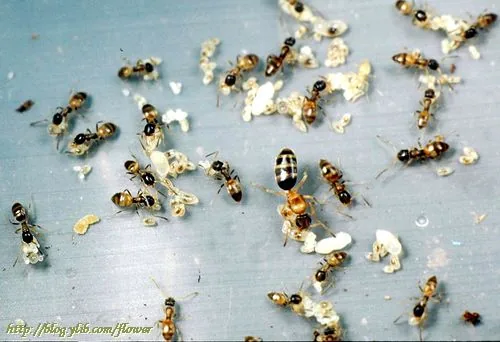
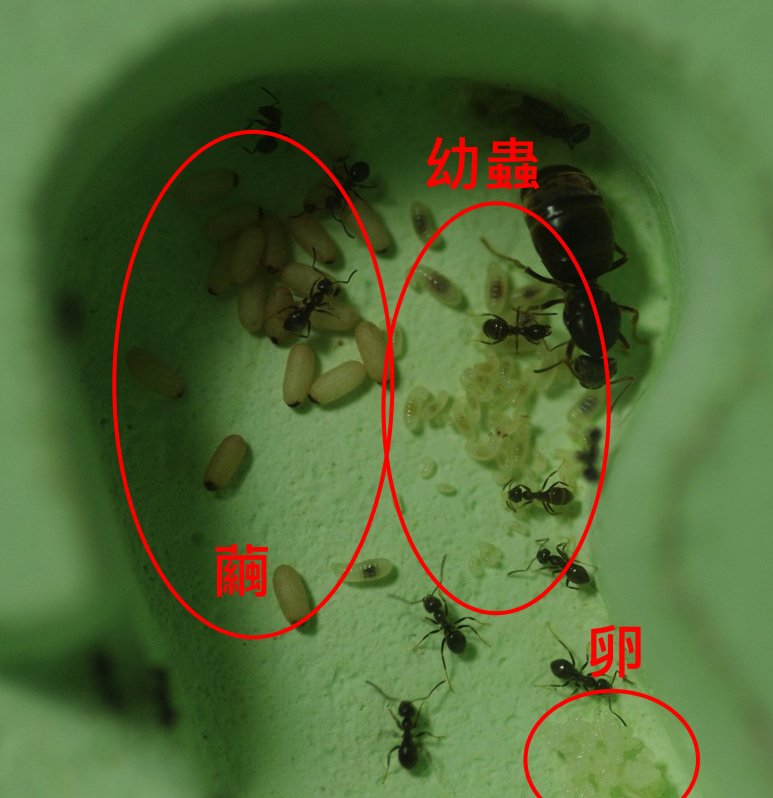
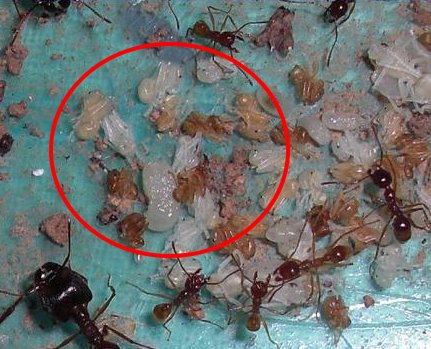
First, take a look at this photo (genus Lasius, omnivorous).
From the photo above you can clearly see that the ants carefully sort the eggs, larvae and cocoons into separate piles.
Even the larvae are clearly grouped by age!
Ant larvae
Ant larvae go through five instars. Each time a larva moults and grows, it moves on to the next instar, and after the fifth instar it pupates and spins its cocoon!
Harpegnathos venator (ponerine, carnivorous)
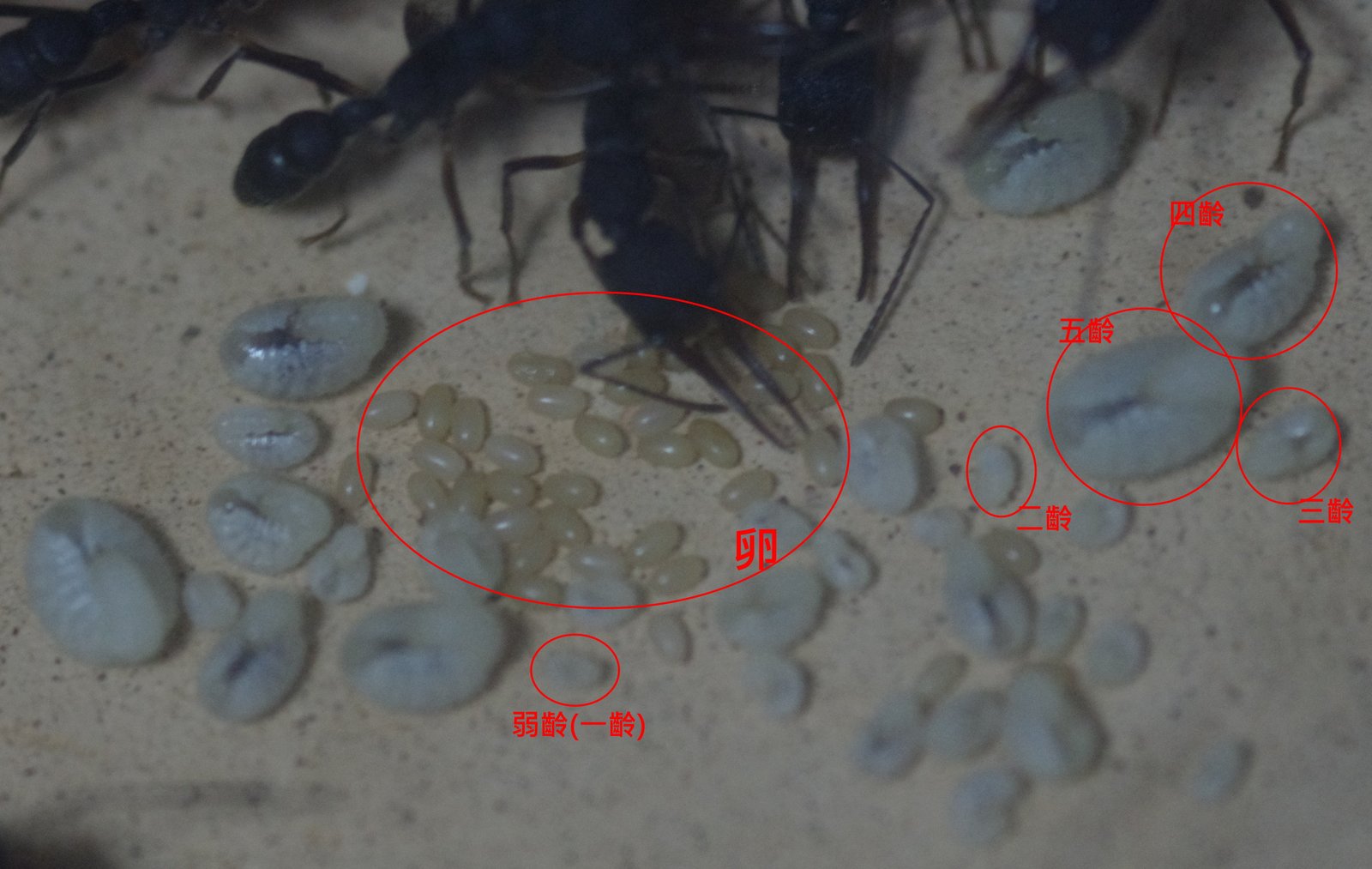
In the photo above, the size difference between each instar is circled. Each instar has a fixed body size.
Camponotus singularis (genus Camponotus, omnivorous leaning herbivorous)
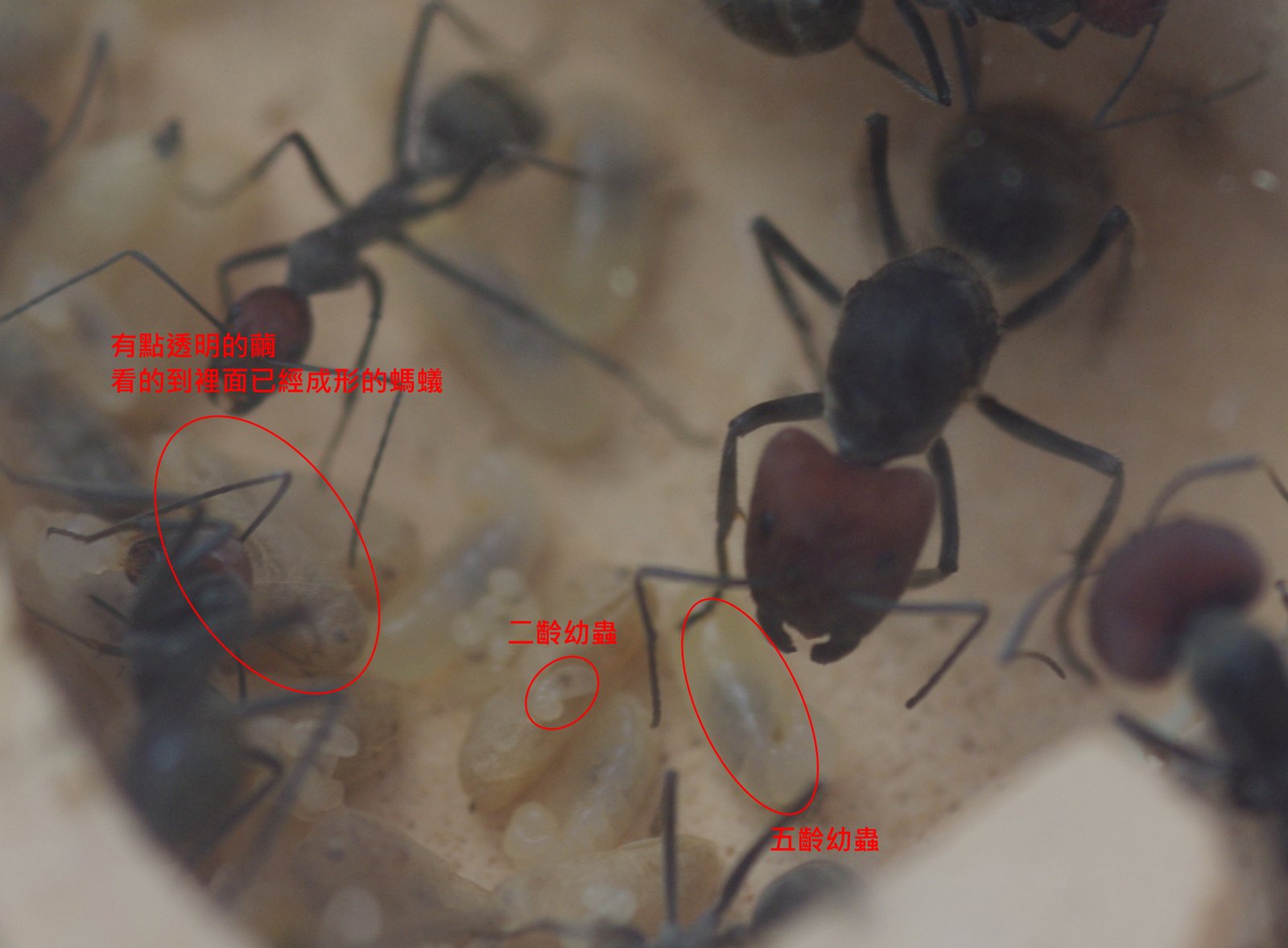
In the picture above, in the cocoon circled at the top left you can clearly see the ant taking shape inside.
Pachycondyla astuta (genus Pachycondyla, carnivorous)
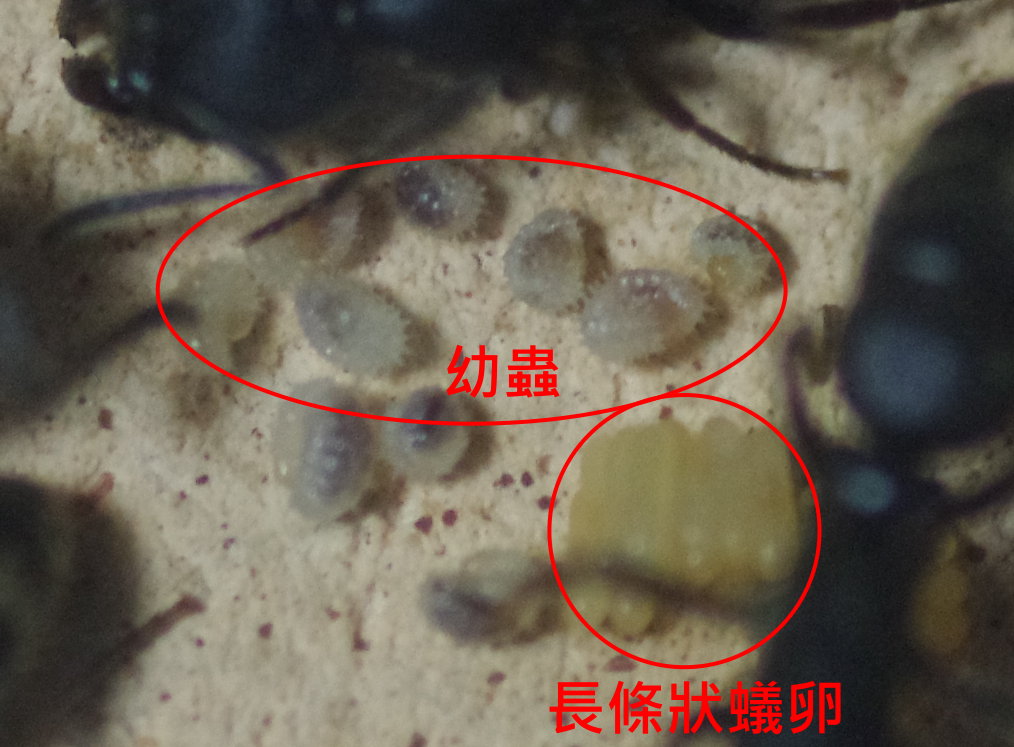
In this species the eggs and larvae look obviously different. The eggs are pale yellow and elongated.
The larvae are no longer elongated but oval, with soft spines on the body, as in the two photos below!
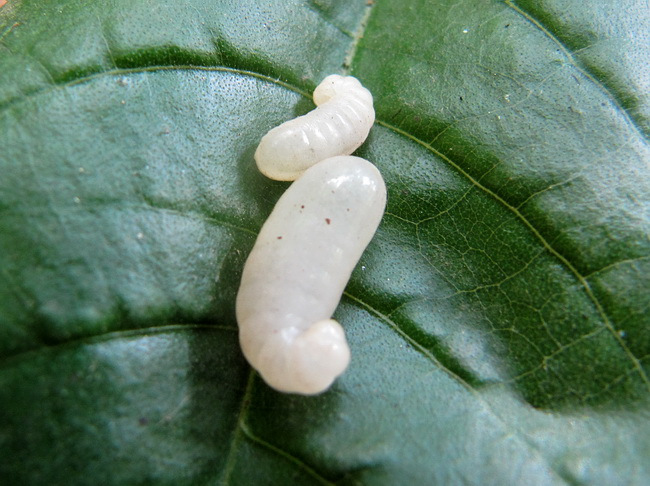
VS
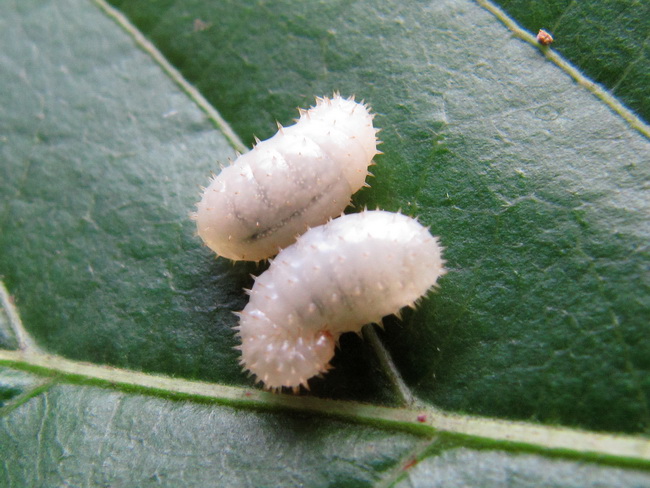
From the photos above you can learn how to tell eggs, larvae and cocoons (pupae) apart.
Also, have you noticed how the larvae of predatory ants differ from those of other ants?
Predatory ant larvae look rather unusual, some oval and some elongated, and most of them look spiny.
The larvae of other ants, on the other hand, are smooth and slender, with a layered, segmented look.
Another important difference is this:
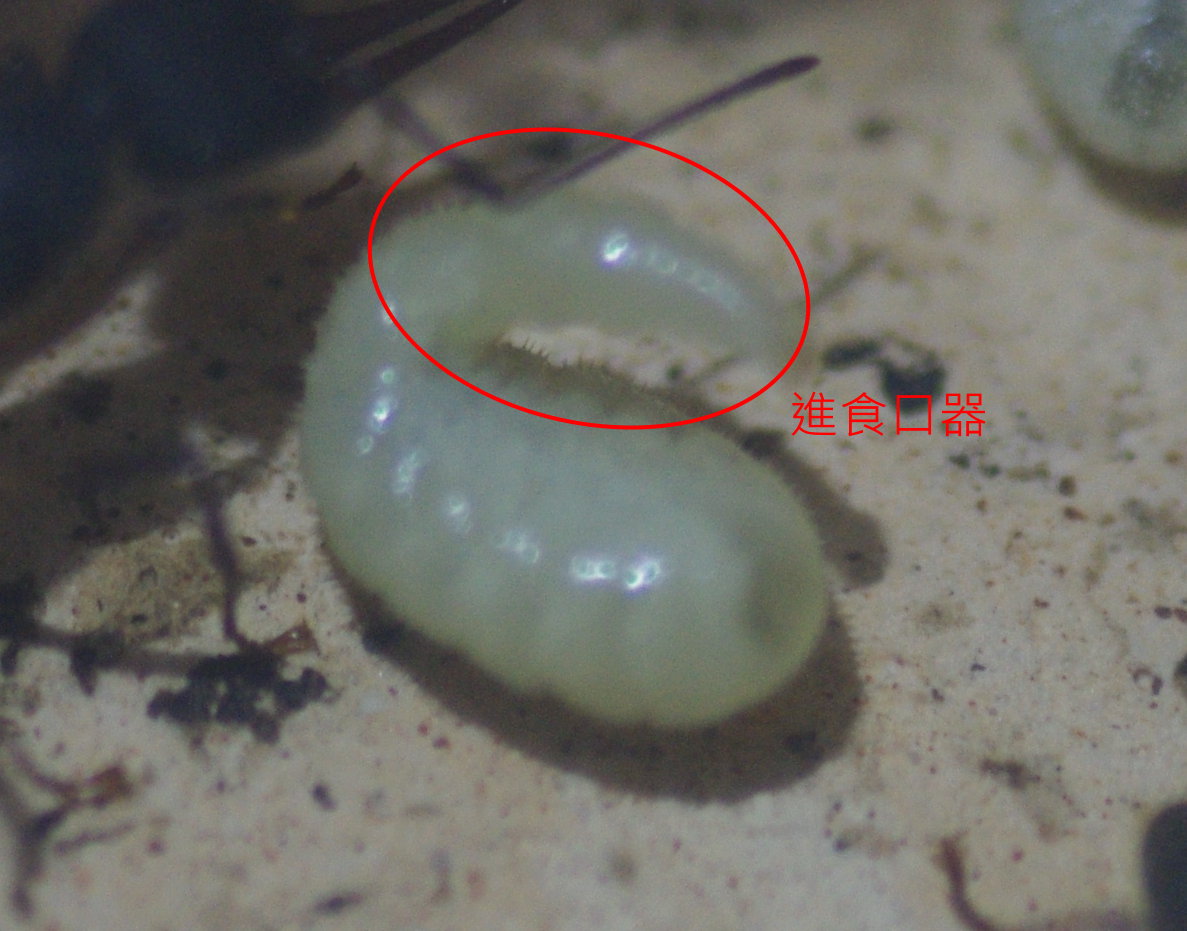
Predatory ant larvae feed themselves; the larvae of other ants are fed by the workers.
This important difference affects a key point in keeping ants!
Ants whose larvae feed themselves need a large, wide space, so that when the workers bring prey back, the larvae do not end up with uneven access to food.
So when keeping stinging predatory ants like these, such as Pachycondyla, Leptogenys, Odontomachus, other ponerines, Diacamma, Anochetus, Odontoponera and so on,
you need to pay special attention when choosing or making a plaster nest!
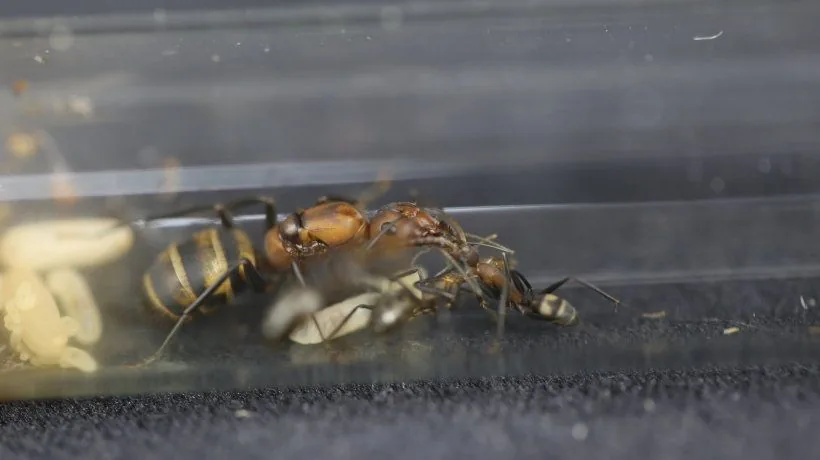
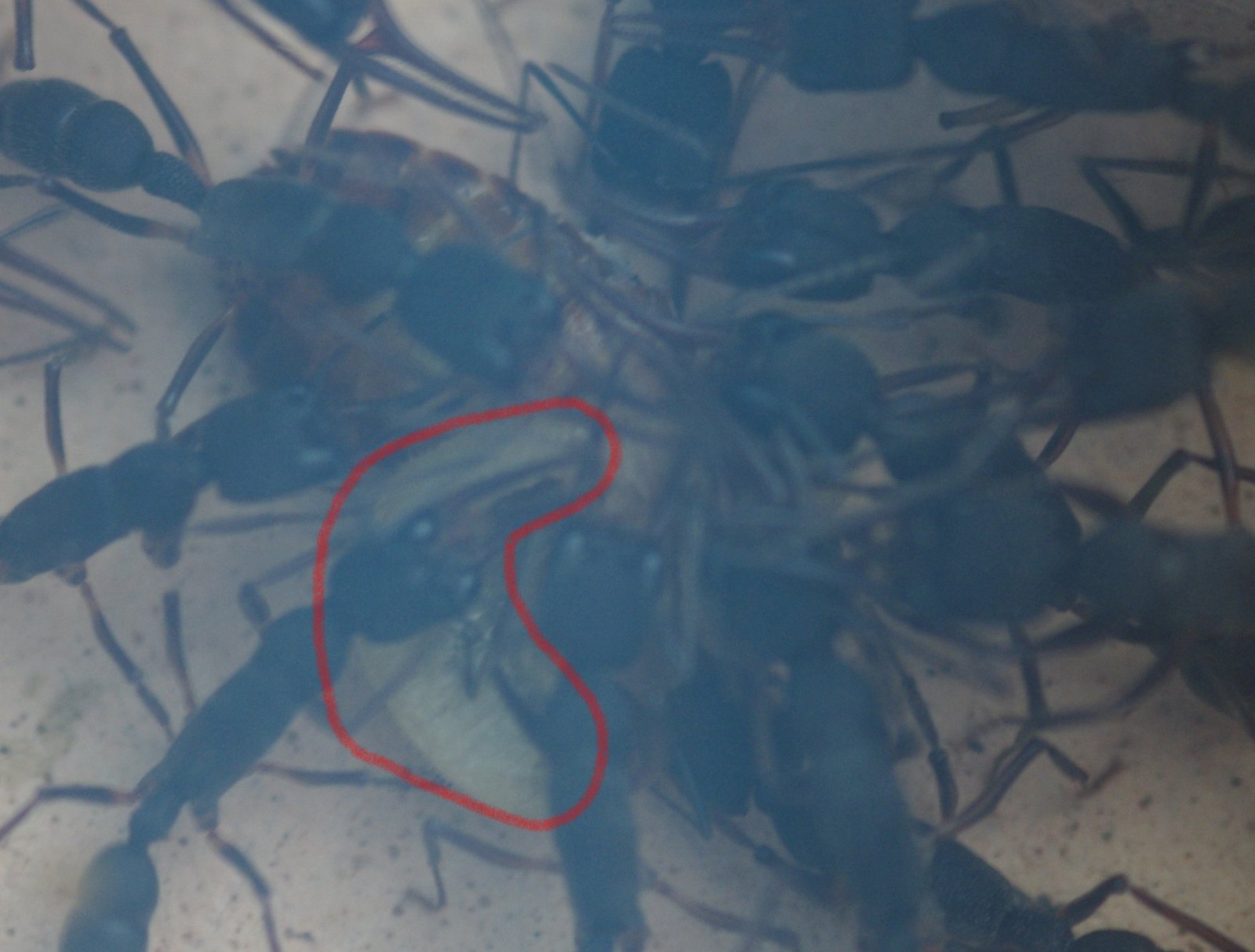
The photo below shows workers that have brought back a red runner roach and placed it beside the larvae.
A larva is extending its mouthparts to eat the roach.
Besides feeding themselves, there is one more thing to watch out for when keeping these larvae:
They need supporting material to spin their silk and form a cocoon.
Unlike other larvae, if they have no material to attach to, they very easily fail to spin a cocoon, and after a few failures they die!
So when keeping ants like these, you must provide them with some “supporting material,”
such as soil or paper scraps (choose something non-toxic and resistant to mould).
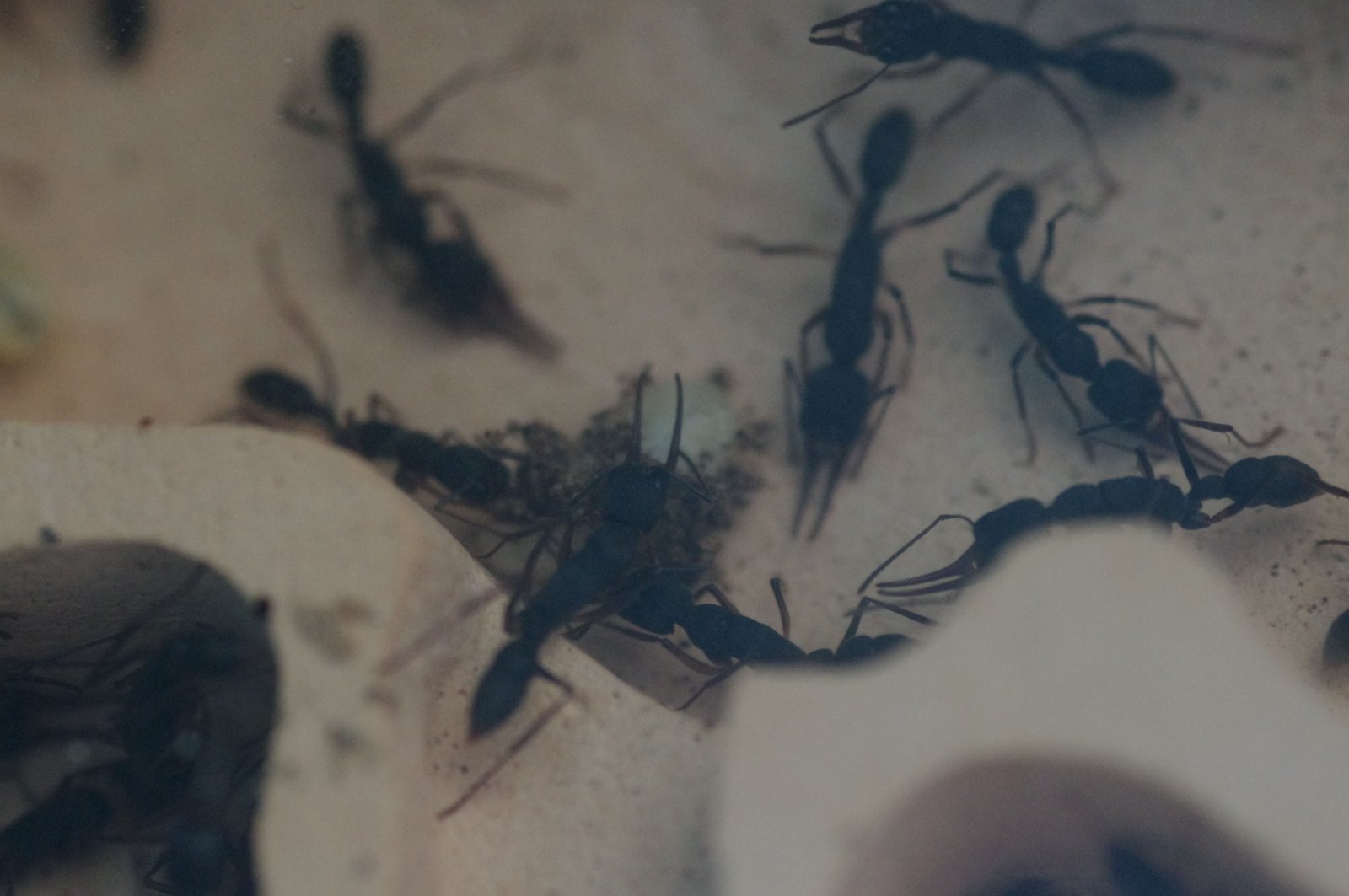
When a larva reaches the fifth instar, the workers pile the required material onto the larva,
and the larva begins spinning its silk.
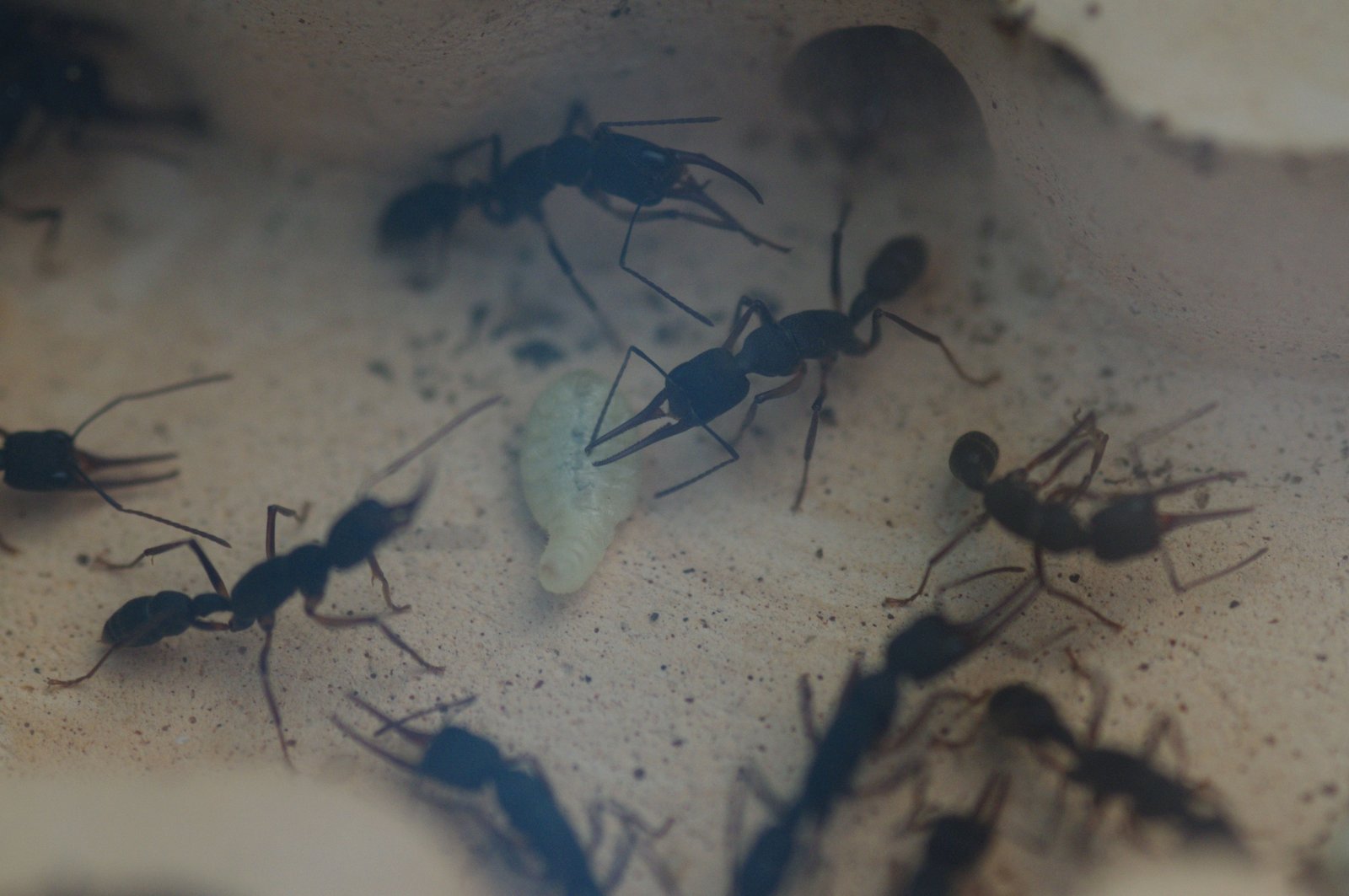
The workers know this larva is about to spin its cocoon,
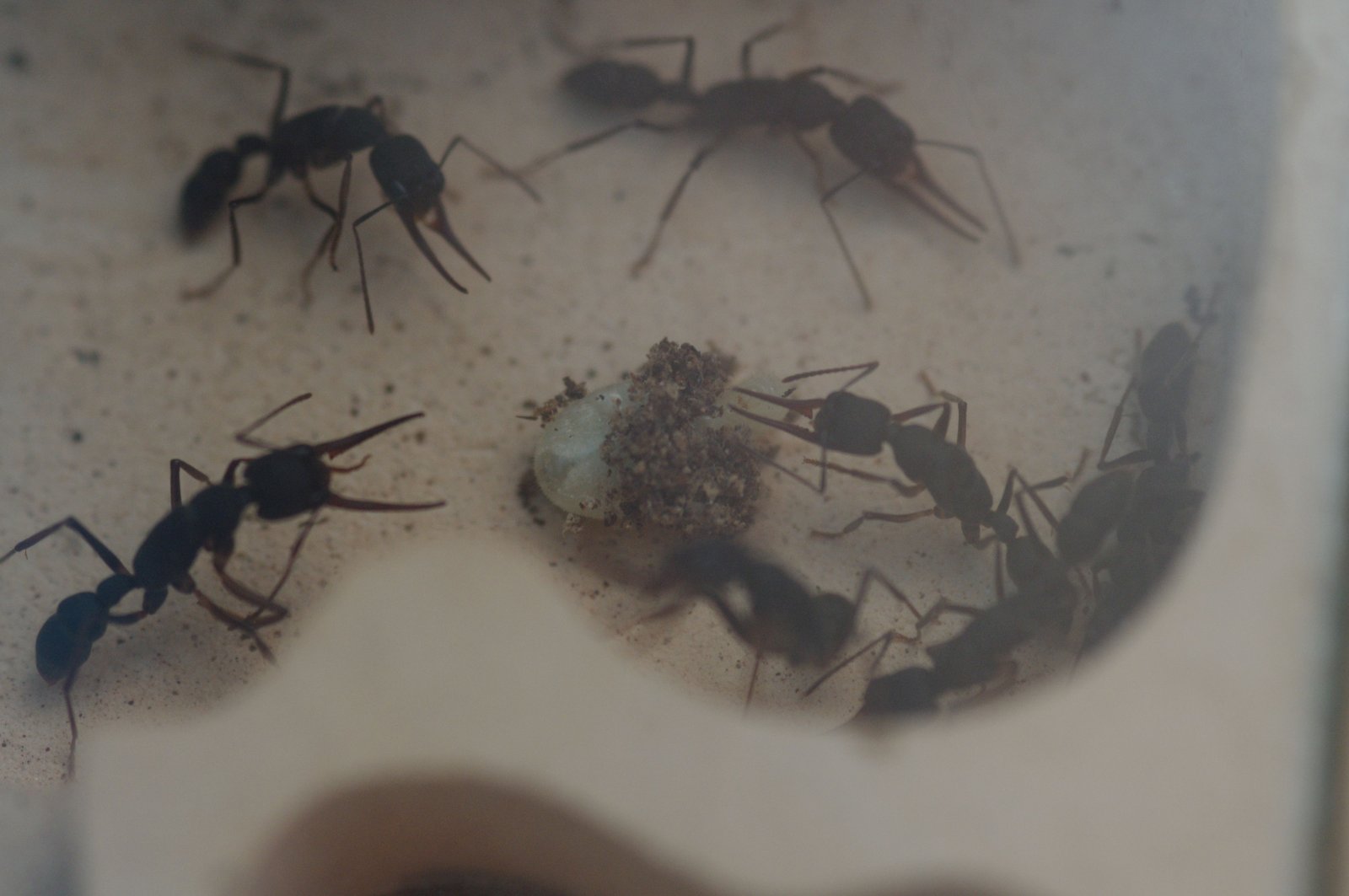
so they gather some soil and drop it onto it.
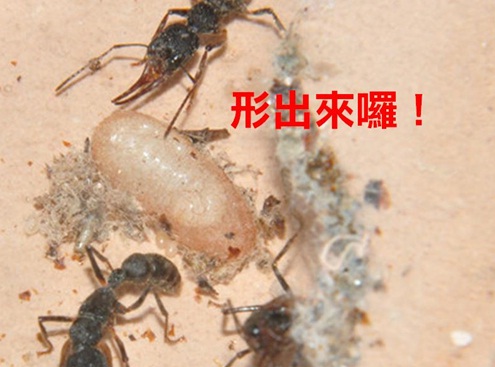
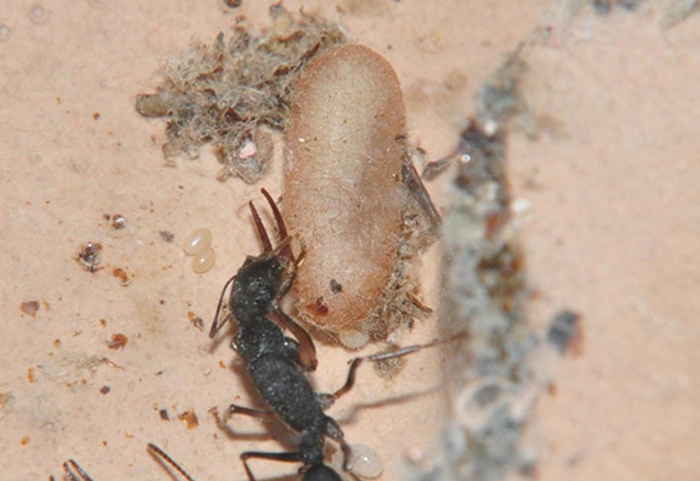
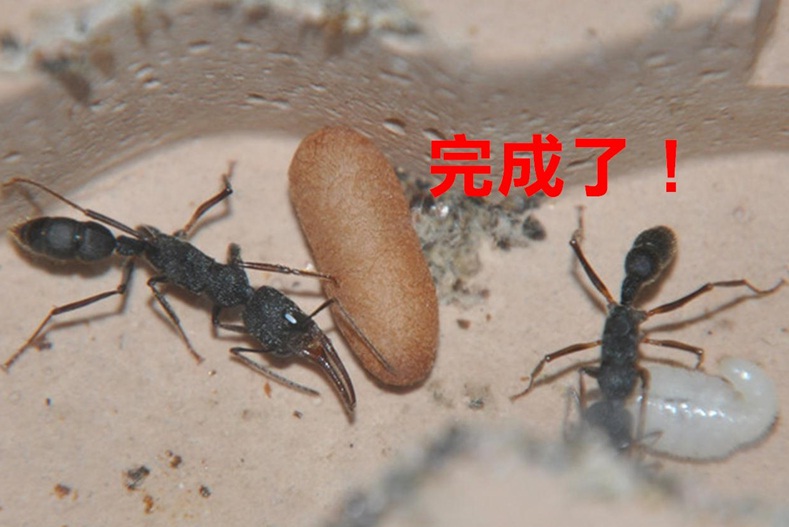
The difference between cocoons and naked pupae
Finally, there are differences in the pupal stage as well!
All ants go through a pupal stage, but the pupae of a few ants have no cocoon and do not need one for protection!
The larvae of most ants that need a cocoon for protection will very easily die if they fail to spin one.
But the larvae of the few ants that do not need a cocoon will develop fine without one.
We call this kind of pupa a “naked pupa.”
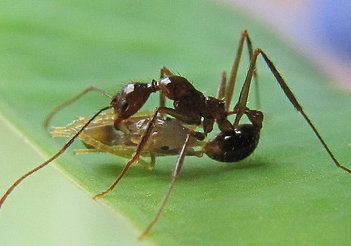
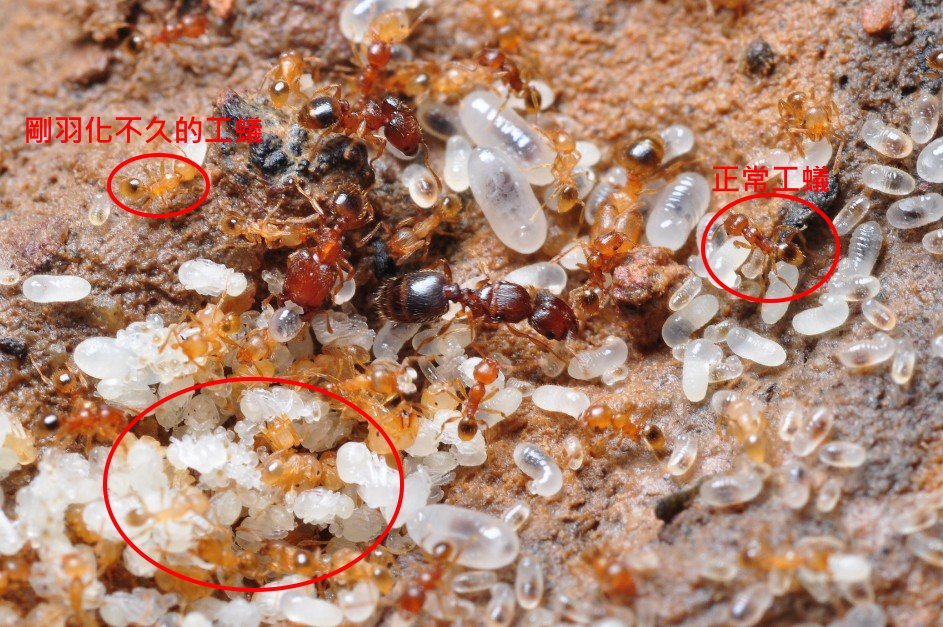
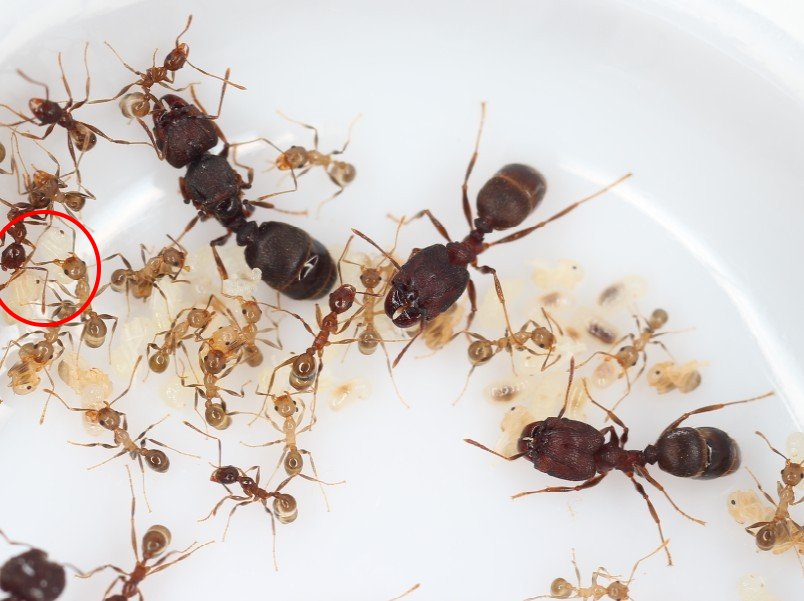
When a worker is about to eclose, the pupa darkens in colour.
A newly eclosed worker is paler in colour and has a thinner cuticle; after a while it returns to its normal colour.
All ants in the subfamily Myrmicinae have naked pupae!
If you are not sure which ants belong to Myrmicinae, see the ant classification table.
Discussion and feedback on the above are welcome; if there are any errors, corrections are welcome too!
Please let us know if you wish to repost this content!